Fana Mokoena on playing a sangoma in Masinga
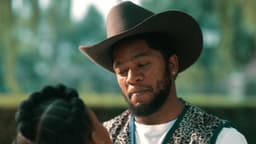
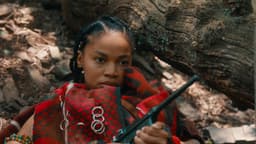
Masinga – The Calli premieres on Showmax this Friday, 5 December 2025. An exiled detective returns to his homeland to confront the ghosts of his past, including the ritual murder of his younger brother, who had albinism. Now he must fight to save an Asian girl from a similar fate.
Masinga has already won five awards, including Best Director and Best Screenplay for filmmaker Mark Engels at both the 2025 Simon “Mabhunu” Sabela Awards in Durban and the Palermo Independent International Film Festival in Italy.

Hakeem Kae-Kazim as Masinga
Starring SAFTA winners Hakeem Kae-Kazim, Abdul Khoza, Warren Masemola and Brandon Auret, Masinga also marks the powerful return to screen of Fana Mokoena (World War Z, The Lab), who resigned as an EFF MP in October 2024.
We sat down with the SAFTA and Africa Movie Academy Awards winner to find out more about the gripping crime thriller.
Tell us more about your character.
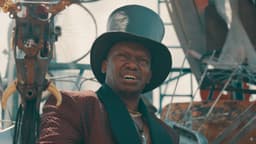
I play Molombo, who is a sanusi, essentially an isangoma. But with Molombo, something has gone wrong. Something in his nature has shifted. He’s a sangoma who has taken a dark turn, becoming one of the antagonists in the story, which made him fun but also challenging to play.
What drew me to the character is when Mark Engels (director) told me that beyond the many themes in the film, Masinga also confronts issues such as muthi killings and the targeted killing of people with albinism. That’s something I’ve been deeply concerned about for a very long time. We can’t tackle every societal issue at once, so having the opportunity to be part of a project that directly addresses these themes was something I couldn’t pass up.
What aspects of this character challenged you most, especially considering how Molombo engages in dark magic?
I spoke to a cousin of mine who is a sangoma, and what struck me was the spiritual side of this world.
A sangoma is essentially a doctor in isintu. We call them an inyanga – someone who heals and supports our wellbeing. But when a practitioner strays and begins to engage in dark magic, they stop assisting your health and instead begin invading it. They may order killings, send harmful spirits, and do things that are the complete opposite of healing.
As actors, we’re always looking for challenges, and the challenge here was to find the spiritual essence of Molombo. This is a character rooted in darkness, and spiritually, he was exhausting. Physically, we can push through almost anything, but spiritually? This role drained me. I found myself irritable by the end of each day, and after filming, I would just want to go home, eat, sleep, and debrief.
However, even though the character exhausted me, one of the two roles I’ve always wanted to play is a sangoma; the other being King Moshoeshoe.
So this was a dream, but a difficult one.
Do you feel that you’ve successfully shed the remnants of the Molombo character?
I don’t think we can ever fully shed the work we do, because we learn and consume so much through each character. Every role becomes a kind of education. You absorb the spirit, the environment, the psychology of the character, and those things don’t just disappear.
We debrief the character, so to speak, to move on; otherwise, you would go mad. I’ve done enough to continue with my life, but I believe every intense role leaves either a scar or a lesson. Something remains with you, and Molombo certainly has.
What do you hope society takes away from watching Masinga?
I hope audiences learn about the tragedy of albino killings, the kidnapping of children for dark rituals, and even broader international issues, things we see on the news daily, like global conflicts. All of these themes are present in the film.
But my biggest concern today is developing a more sophisticated audience. We’re in a strange time where a lot of content is bubblegum. And that’s a huge problem.
We need more films like Masinga that educate, challenge, and inform viewers.
South African audiences, in particular, will tell you when they feel undermined. They know when they’re not being given quality. Masinga brings knowledge, relevance, and depth, and I believe society will appreciate that. We need audiences who not only watch but also question and understand the world around them.
A film like Masinga also takes South African and African experiences beyond our borders, allowing others to see themselves in our stories. It’s extremely important to tell African stories within a global context, and Masinga does that beautifully.
Watch the trailer for Masinga
More like this

Dangerous Animals (2025)
A tense, twisted and jaw-dropping survival horror. When a surfer is abducted by a shark-obsessed serial killer, she must escape before he performs his sadistic shark feeding ritual.

Companion (2025)
From the creators behind Barbarian comes an unsettling horror comedy. When a group of friends go on a weekend getaway, they have no idea of the horrors that are about to unfold.

South Africa’s stories and storytellers recognised as SAFTA nominees announced
Mzansi’s boldest stories take centre stage as the 2026 SAFTA nominees are unveiled, with a wave of nominations across DStv and Showmax.

Heart Eyes (2025)
In this whodunit horror slasher, Valentine's Day is turned into a battle for survival as a masked serial killer goes after couples.

Bride Hard (2025)
When a mercenary team hijacks a wedding, a secret agent bridesmaid fights to save the day in this chaotic action comedy.

Friendship (2024)
Tim Robinson and Paul Rudd lead this dark comedy about an awkward man trying to be friends with his charismatic neighbour.

Sweethearts (2024)
Two college freshmen make a pact to break up with their high school sweethearts during the "Drunksgiving" holiday break, but their plan goes awry.

How M3GAN 2.0 blurred the lines between human and AI
Allison Williams, Ivanna Sakhno and M3GAN 2.0 writer-creator Gerard Johnstone talk about how the back-and-forth between humans, robots, and AI turned creepy on set.
Outlaws, now streaming on Showmax
Go on holiday with RHUGT: Africa
More Mzansi hits

Must-watch trailer: The People vs VBS explores South Africa’s biggest bank heist
The People vs VBS is IdeaCandy's true-crime docuseries on South Africa’s biggest bank heist. On Showmax from 25 March and on M-Net from 2 April.

What to watch on Showmax in March 2026
Local gems, Showmax Originals, international hits and intriguing documentaries await Showmax viewers in March.

Brakpan Chronicles S1
What is true about the town of Brakpan and what is fiction? Do the jokes about this place have any basis in reality? In this two-part documentary, we aim to find the real Brakpan, the place that exists beyond the memes.

Pearl Modiadie steps into her power in Law, Love and Betrayal S2
Pearl Modiadie talks about stepping into power as Ayanda in Law, Love and Betrayal S2, premiering 8 March on Mzansi Magic and 9 March on Showmax.
Latest Stories
What to watch on Showmax in March 2026

Bad Girls Bootcamp S1

Nhlanhla Kunene confirmed for Law, Love and Betrayal Season 2

Christall dishes on The Real Housewives Ultimate Girls Trip

Brakpan Chronicles: Die mense sê, kom in

Schalk Bezuidenhout trades stand-up for 9-5 in Die Kantoor

A heartbreaking loss: Nolwandle Biyela’s final stand in Outlaws Season 2

Fall in love with romantic drama Touch, now on Showmax

Antonie Marx on Volspoed and why it's a must-watch
Sandra Stein makes her debut on Law, Love and Betrayal S2

Albert Pretorius on Die Kantoor, SA’s re-imagining of The Office

20+ addictive South African reality shows to stream

Where to watch The Real Housewives franchise online

How to Train Your Dragon: Bringing Hiccup and Astrid to life

What to watch on Showmax in January 2026

7 things to know about indie award-winning movie Dìdi

Mission: Impossible – The Final Reckoning’s South African stunts

Die Kwiksilwers (2024)

Where to see the cast of Mpondoland on Showmax

Angel on The Real Housewives Ultimate Girls Trip, Jojo and more

Thandolwethu Zondi on his new role in Outlaws S2
Must-watch trailer for Showmax's turbo-charged reality series Volspoed
The Real Housewives Ultimate Girls Trip cast on first impressions, beefs and more

Fana Mokoena on playing a sangoma in Masinga