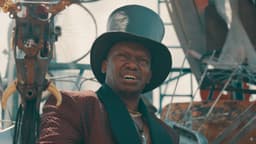
“You don't create something so powerful purely through military tactics” - Shaka iLembe co-creator
In her storied career, Desireé Markgraaff has produced some of South Africa’s most popular TV shows, which have won at the Emmys and Sundance (Amandla!), at the Venice Film Festival (Yizo Yizo), and at the Africa Magic Viewers Choice Award (Shuga). She’s created shows with more SAFTA wins than fit on even the biggest of shelves, with 27 for Isibaya alone, and produced over 70 video installations at The Apartheid Museum.
Her crowning achievement, though, is co-creating and producing Shaka iLembe, Google’s most searched TV series in South Africa in 2023, which set the SAFTA record for the most Drama category wins ever in a year in 2024.

With Shaka iLembe S2 now available to binge on Showmax, we sat down with Desireé to find out more.
Where did the idea for Shaka iLembe come from?
I'm a parent of three. When I was shooting Jacob’s Cross in Nigeria about 14 years ago, I was with a group of women and we were all shocked about what our children were watching on TV. There was no African content for kids on TV, so our kids were all watching Ben 10 and Hannah Montana. And we were really feeling sad. You know: where are the heroes on our own continent? That was the seed of the idea.
On the flight back from Nigeria, I was sitting on the plane talking to my colleague and I said, ‘I really want us to start researching to do a series about when we were kings. There’s this huge world before colonialism that nobody's exploring.’
Shaka iLembe is not a kids’ series by any means, but it says to parents: “Let’s remember to tell those stories.”
Why Shaka?
Shaka felt like the logical place to start. It doesn't matter where you go in the world, people know the word Zulu and they've heard of Shaka Zulu.
But I don’t think there’s been any really deep unpacking of Shaka as a human being, certainly not on our screens. He’s been portrayed as fairly one-dimensional: a great military strategist and warrior.
I think that he's often been underestimated. You don't create something so powerful purely through military tactics.
Leadership is about many things. Shaka didn’t just use one approach. For example, he also used diplomacy and cultural power. If you think of all the rituals of dance, of music, of culture in the Zulu context, you understand how he used them to unite all these different kingdoms, which had their own cultural activities.
Why is Shaka iLembe so important right now?

How we see ourselves has a lot to do with where we come from. When your parents keep telling you that you come from great ancestors, you grow up feeling like you are a part of something. You feel good about your lineage and about yourself. These are all small but important things to the psyche of a nation.
The world is in turmoil. So many bad things are endemic in our leadership spaces. It’s not just here.
But okay, then let's look back at where we come from. Let's tell stories that remind people that we come from something great and that we're not defined by where we are today.
Shaka Ilembe is also a reminder that what you fight for, you fight for together. In episode 2, we see the entire Zulu community take a stand together, women and elders included. That talks to where we are in South Africa. We can’t leave it to our leaders alone; we have to work together and put our hands together.
Why was TV the best format for this?
African history has always relied on an oral tradition, but we remember what we see. We wanted to create memorable images that will live on.
Television is the new novel. It's the way we communicate, and it's the way we try to understand each other as a society.
How long did it take to make your vision of Shaka a reality?

Mounting a project like this takes many people. My creative partner at Bomb, Angus Gibson, was excited by the idea of telling this epic story, and we found like-minded collaborators like Nhlanhla Mtaka, who brought great passion and knowledge, and Nomzamo Mbatha, who led the cast in Season 1 and joined as exec producer.
Doing period stuff is expensive, as everything has to be created from scratch. And for all of us, this was something new. We had to learn how to do period pieces. We went in partnership with Mzansi Magic to raise the money because of the scale of the show, and we had a lot of false starts. When we finally got the green light, it was close to eight years later.
We were researching all that time. So the battle to get it off the ground was long, but it was a blessing because by the time we were ready to go, we'd really done the research and made so many incredible contacts.
Tell me about the research that goes into something like this?
We were researching all the time, reading, meeting historians, descendants of families and oral custodians.
Most African history resides in books by academics or collated from colonial bureaucrats, and it is largely from a foreign lens looking in. It is seldom from the African perspective looking out. And academic research can be dry content that is hard to wade through, where you read the first few pages and then nod off.
But that’s just the tip of the iceberg. When you start to speak to people, historians and oral custodians of history, there's so much life and energy, it's so exciting. They're telling you so many anecdotes about what happened.
Of course, nobody really knows blow by blow what happened. We know little bits of history and some of it is fable, some of it is legend, but you try to piece it together as you listen to different historians and different takes, and even to different amahubu [traditional music], which give insights about what happened. You slowly try to surface who these people were, and then you've got to put character into them. So if Nandi's praises talk about her walking with legs that do not meet, what does that mean? Perhaps that means that she walked in a very powerful way, like a man? And what does that say about her personality? You fill in the gaps.
Why did you start the series before Shaka was born?

By the time we introduced Shaka, we wanted the audience to already understand the lay of the land and the world he was born into. There were 40 or 50 small kingdoms spread across what is now KwaZulu-Natal, and we wanted to show that they were sophisticated societies. They had politics and medicine, they understood how the land worked, and there was diplomacy and agreements between the different kingdoms.
Also, we’d all watched Henry Cele in the Shaka Zulu series in the 80s. He was a fantastic Shaka. How do you introduce an actor to compete with the love we all have for that first iconic portrayal? So partly the decision to go all the way back was to say, “Let’s use this as a palate cleanser for the audience,” so that you slowly forget about the old Shaka and you start to fall in love with these characters, so that by the time you meet Shaka as an adult, you’re already invested, because you’ve seen his journey from a child, we know his mother and father, and we understand his emotional framework and the moving of the world around him.
What has been a highlight on set for you?
The way everyone has brought their 100% passion to telling this story, understanding its spiritual and cultural value.
Buzetsheni Mdletshe, who’s been the praise singer for two kings, came onto the location before we even built the sets. We asked the ancestors’ permission. We asked them to bless us. We asked them to travel with us. We asked them to help us tell their story in the best possible way. I feel a little bit tearful even when I tell you this because I remember how it felt, standing on that set and just feeling like you're embarking on something that's very deep and very important.
It was an extremely spiritual set. I could see how it impacted many of the actors in scenes. We had lots of moments where we had to stop shooting because we knew that the ancestors were with us on that set, and everybody understood that, in that moment. Sometimes we would lose hours.
What are you proudest of?
The care and love everyone poured into it. Viewers feel that it has been made with real attention to detail and quality filmmaking. That is the triumph of this series; that it will sit as a benchmark for the industry.

Beauty, and how beauty is presented, has been really important for us. We strive for authenticity, but also to make things pop a bit more.
If you look at old Zulu artefacts and beadwork, the craftsmanship is magnificent. This was an era when quality mattered, so we tried to honour that.
And the cast, who gave such incredible performances and really celebrated their characters.
Was making Season 2 any easier?
Only because we understood many of the challenges.
We had to rebuild most of the sets. They’re made out of natural materials, so a year and a half between shoots took its toll.
And the scale of Season 2 was much bigger, so the wardrobe grew huge. We couldn’t just re-use what we’d made for Season 1.
We had a fantastic launchpad from Season 1, which set us up well for the second season, but we had to scale up everything dramatically, and it was hard.
We created over 8 000 jobs on Season 1 and over 16 000 jobs on Season 2. That came with a lot of HR challenges. When you partner with so many people, it’s challenging to understand all of their dynamics. That was a big learning curve.
We were working in the winter because in the summer, there are snakes, and it's too hot for people to be out in the sun wearing very little: your skin is going to get burned. But it was very hard in the winter, again because people are wearing very little, so how do you keep them warm?
With all the extras, we could have a thousand people on the set on any given day, so just managing those logistics was challenging: how do you feed everyone, and make sure you have enough toilets, and that everyone stays warm enough?
We were shooting in a wildlife sanctuary and at night, poachers would come in. Our stuff was being stolen in the middle of the night. Even big, heavy things, like the lighting rigs you’d been planning on using the next morning.
So we really had to roll with the punches.
That all sounds wildly stressful. How did you manage that kind of stress?
The purpose of the series is so much larger and more important than any given thing that is happening in a day. Everybody in the making of that show understood that we were doing something that was important. None of us went to that show thinking it was just another TV series. We all understood that what we're trying to do is to bring a really important history to life for future generations, for our kids. When you can remember why you’re doing this and why it matters, that gives you courage to push through the tough things.
We also had an unbelievable team, so the stress was shared. It’s like Shaka – when he went into battle, it wasn’t him alone. He had great people around him, and that’s why he commanded so effectively. That’s why we celebrate Ngomane, Nandi, and Mkabayi in Shaka Ilembe. No great feat is accomplished without multiple hands. Our amazing directors: Angus Gibson, Adze Ugah, Zeno Petersen, Catherine Stewart. My co-exec producers Nomzamo Mbatha and Nhlanhla Mtaka. Our world-class crew and cast.
We also had a good relationship with our client, Mzansi Magic. We were completely aware of the massive risk they were taking on their side, so we were extremely grateful.
What can audiences look forward to for the rest of the season?

Shaka iLembe aims always to celebrate this period of African history with dignity. It’s about all the men and women who helped shape a man to aspire to greatness, and how every household has to come together to make a nation great.
Season 1 was the boy-to-man story. Season 2 is about the man, who he is.
We start off as Shaka arrives at KwaNobamba with Nandi to claim his throne as the new Zulu king. And then it is about exploring how he builds the Zulu nation.
At that time, the Zulus were relatively inconsequential in the region. There were like 700 to a thousand Zulus. This season, we see how Shaka goes from this tiny little kingdom to build the mighty Zulu kingdom that we all know. And he did that in about four years. Now, of course, there are over 20 million Zulu people.
Who are some breakout stars this season to look out for?
There are many. Nkanyiso Mzimela, who plays Dingiswayo’s son, Somveli. Amande Seome, who plays Ntombazana. And Anele Nene, who plays Sikhunya, to name a few.
Beyond the record number of SAFTAs and becoming Google’s most searched TV series in South Africa, what feedback has meant the most to you?
Definitely the response from viewers first and foremost, that people have engaged so deeply with the series and feel proud of it. Someone recently sent me a huge bouquet of flowers, thanking us on behalf of South Africa.
And then the response from within the Zulu traditional spaces. Having His Majesty King Misuzulu at the premiere was a wonderful moment and really important to us, a real validation for the series.
The next evening, we had a screening for COGTA in KZN, with the most warm and affirming speech from Prince Buthelezi. It was always important to us that we make people who feel close to this history proud and feel that we are telling a story where the history has been handled with love and care, even if we’ve conflated and added spice to things here and there.
More like this

The Neighborhood S1-8
When Dave Johnson and his family arrive from Michigan, they're unfazed that their new dream home is located in a community quite different from their previous small town.

Pearl Modiadie steps into her power in Law, Love and Betrayal S2
Pearl Modiadie talks about stepping into power as Ayanda in Law, Love and Betrayal S2, premiering 8 March on Mzansi Magic and 9 March on Showmax.

Bad Girls Bootcamp S1
A group of rebellious young girls are put through a reality-themed boot camp by their families. These ladies face multiple challenges intended to moderate their behaviours for a better life.

Jojo on The Real Housewives Ultimate Girls Trip: Africa reunion, social media backlash and more
Jojo opens up about the highly anticipated reunion for The Real Housewives Ultimate Girls Trip: Africa, coming to Showmax on 20 and 27 February.

South Africa’s stories and storytellers recognised as SAFTA nominees announced
Mzansi’s boldest stories take centre stage as the 2026 SAFTA nominees are unveiled, with a wave of nominations across DStv and Showmax.

The ‘Burbs S1
In this adaptation of the 1980s Tom Hanks dark comedy, a couple moves back to the husband's hometown, only to face a cul-de-sac shrouded in mystery.

“You don't create something so powerful purely through military tactics” - Shaka iLembe co-creator
Shaka iLembe co-creator Desireé Markgraaff reflects on the vision, research, and importance of telling our stories. Stream Seasons 1–2 on Showmax.
Where to see the cast of Shaka iLembe S1-2 on Showmax
From Nomzamo Mbatha as Queen Nandi to Lemogang Tsipa as King Shaka Zulu and Thembinkosi Mthembu as King Dingiswayo, see the cast of Shaka iLembe in some of their other acclaimed roles on Showmax. Binge now on Showmax.
Outlaws, now streaming on Showmax
Go on holiday with RHUGT: Africa
More Mzansi hits

Must-watch trailer: The People vs VBS explores South Africa’s biggest bank heist
The People vs VBS is IdeaCandy's true-crime docuseries on South Africa’s biggest bank heist. On Showmax from 25 March and on M-Net from 2 April.

What to watch on Showmax in March 2026
Local gems, Showmax Originals, international hits and intriguing documentaries await Showmax viewers in March.

Brakpan Chronicles S1
What is true about the town of Brakpan and what is fiction? Do the jokes about this place have any basis in reality? In this two-part documentary, we aim to find the real Brakpan, the place that exists beyond the memes.
Pearl Modiadie steps into her power in Law, Love and Betrayal S2
Pearl Modiadie talks about stepping into power as Ayanda in Law, Love and Betrayal S2, premiering 8 March on Mzansi Magic and 9 March on Showmax.
Latest Stories
What to watch on Showmax in March 2026
Bad Girls Bootcamp S1

Nhlanhla Kunene confirmed for Law, Love and Betrayal Season 2

Christall dishes on The Real Housewives Ultimate Girls Trip

Brakpan Chronicles: Die mense sê, kom in

Schalk Bezuidenhout trades stand-up for 9-5 in Die Kantoor

A heartbreaking loss: Nolwandle Biyela’s final stand in Outlaws Season 2

Fall in love with romantic drama Touch, now on Showmax

Antonie Marx on Volspoed and why it's a must-watch
Sandra Stein makes her debut on Law, Love and Betrayal S2

Albert Pretorius on Die Kantoor, SA’s re-imagining of The Office

20+ addictive South African reality shows to stream

Where to watch The Real Housewives franchise online

How to Train Your Dragon: Bringing Hiccup and Astrid to life

What to watch on Showmax in January 2026

7 things to know about indie award-winning movie Dìdi

Mission: Impossible – The Final Reckoning’s South African stunts

Die Kwiksilwers (2024)

Where to see the cast of Mpondoland on Showmax

Angel on The Real Housewives Ultimate Girls Trip, Jojo and more

Thandolwethu Zondi on his new role in Outlaws S2
Must-watch trailer for Showmax's turbo-charged reality series Volspoed
The Real Housewives Ultimate Girls Trip cast on first impressions, beefs and more

Fana Mokoena on playing a sangoma in Masinga